Ye Sun · 孙烨
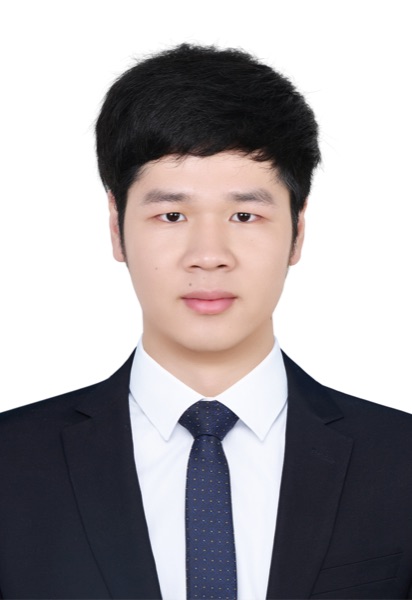
I am a PhD student in Software Engineering at the School of Computer Science and Engineering, Beihang University, in an integrated master’s–PhD program. I expect to graduate in June 2027. My research focuses on knowledge graph reasoning, data mining, and visual analytics.
Advisor:Lei Shi · Co-advisor:Yongxin Tong
- WeChat / Phone
- 13872530255
- cs.yesun@gmail.com
- Sunye_1287495769
- University email
- sunie@buaa.edu.cn
Education
Beihang University · Computer Science and Technology
Bachelor of Engineering, School of Computer Science and Engineering. GPA: 3.67/4.00; major-course scores include Mathematical Analysis (100), Software Engineering (98), and Deep Learning (94).
Beihang University · Computer Science and Technology
Integrated master’s–PhD program, School of Computer Science and Engineering. Master’s stage: Sep 2021–Jun 2023; PhD stage: Sep 2023–Jun 2027 (expected). GPA: 3.87/4.00; rank: 13/143. Major-course scores include Data Mining (100), Algorithm Design and Analysis (94), Software Engineering (95), and Pattern Recognition (93). Research focuses on knowledge graph reasoning, data mining, and visual analytics; related results have appeared in multiple CCF-A papers.
Research
GeneticPrism · Hierarchical graph layout and scholarly evolution visualization
- Project Description: Addresses the joint representation of within-topic citations and cross-topic influence in multi-topic scholarly evolution by proposing a hierarchical graph representation and IFHL layout.
- Key Contributions: Integrates both relationship types into a unified visualization framework for complex evolutionary structures; Leads the design of GeneticPrism overview and GeneticScroll detail views covering topic overlap, temporal evolution, and cross-topic influence, enabling multi-scale linked exploration.
eXpath · Explainable knowledge graph reasoning framework
- Project Description: Addresses the black-box nature of embedding-model decisions by independently proposing an explanation framework that combines ontological closed-path rules and relational-path evidence.
- Key Contributions: Designs a coordinated rule-mining and path-search mechanism for structured explanation generation, integrating ontological closed-path rules with relational-path evidence into a quantitatively evaluable framework; On standard benchmarks, improves two explanation-quality metrics by approximately 20% and reduces explanation-generation time by 61.4% against the best comparison methods, demonstrating gains in both explanation quality and computational efficiency.
RuleDep · Dependency-aware rule aggregation
- Project Description: Leads the design of sparse second-order corrections and a two-stage training framework to model complementarity and redundancy in rule aggregation.
- Key Contributions: Models dependencies among jointly triggered rules by introducing signed gains in log-failure evidence space to distinguish complementary from redundant evidence; Across seven datasets, raises average MRR from 0.382 to 0.396, achieves 21 best or tied-best metrics among interpretable methods, and improves MRR by approximately 10.7% on dependency-rich subsets.
INSPIRE · Expressive Piano Performance Generation
- Project Description: Builds a note-level structured performance-generation framework that generates expressive performances from discrete symbols through relative-timing modeling and continuous distribution prediction.
- Key Contributions: Designs typed encoding that fuses pitch, duration, loudness, and other note attributes into one Transformer timestep, with score-relative timing deviations for fine-grained expressive control; On ASAP, reduces PP HR by 15.2% against PianistTransformer and lowers inference cost for the specified test task by 95.3%, improving deployability and iteration efficiency.
CueIR · Long-term agent memory
- Project Description: Studies traceable memory organization and retrieval. Memory-graph construction and agent tools are operational, with evaluation on the LoCoMo and MemoryAgentBench datasets.
Engineering & industry collaboration
MaterAgent · Agent Harness for materials R&D
- Project Description: Participates in Agent Harness architecture design for end-to-end materials R&D and builds the core framework supporting agent execution.
- Key Contributions: Designed and developed a Paper Browser MCP tool for automated retrieval and question answering over thousands of materials-science papers. Participates in the research group’s industry-academia collaboration with MaterBrain, supporting deployment of the agent framework and tools in materials R&D workflows.
GeneticFlow V2.0 · Large-scale scholarly literature visualization system
- Project Description: Leads development of a multidimensional visualization system for million-scale scholarly literature, integrating graph-layout computation with visual interaction.
- Key Contributions: The system has served 102,129 users worldwide and supported 507,827 visits, and has received software-copyright registration; Compiled Graphviz C++ sources into browser-side layout components, connecting graph-layout computation with front-end visual interaction and independently maintaining the full stack.
Research-agent-based data classification
- Project Description: Developed LLM entity-extraction tools and a RAG-based data classification pipeline for sensitive-data annotation and refinement.
- Key Contributions: Contributed to the research-agent platform by integrating entity extraction, retrieval-augmented generation, and data classification. The team was named one of Beihang University’s Top Ten Outstanding Teams in Artificial Intelligence.
National Key R&D Program: Rare-earth catalysis knowledge graph and full-process digital R&D platform
- Project Description: Led construction of the database and materials knowledge graph, participating throughout the project from proposal to acceptance and ensuring scheduled delivery reviews.
- Key Contributions: Designed a 10^5-scale multimodal materials database integrating heterogeneous sources to support synthesis-condition recommendation and knowledge discovery. Implemented both functions with a knowledge graph to support intelligent materials R&D.
SenseTime · AI full-stack engineering intern
- Project Description: Contributed deeply to the Miaohua AI-drawing system, designing and implementing back-end APIs for efficient and stable core drawing calls.
SenseTime · Model toolchain intern
- Project Description: Contributed to training-cluster scheduling toolchains and led development of the spring.remote command-line tool for remote cluster login and management, as well as system monitoring tools. Received an Outstanding Intern award.
Technical Skills & Languages
- Programming languages
- Proficient in Python, Java, and C/C++, with at least 10,000 lines of code written in each; familiar with Kotlin/JVM.
- Machine learning
- Familiar with machine-learning principles and PyTorch, scikit-learn, and Transformers; scored above 90 in machine learning, data mining, deep learning, and related courses.
- Systems and back-end development
- Familiar with Linux administration, shell scripting, and Docker; development experience with Flask, Django, MySQL, and PostgreSQL.
- Front-end and visualization
- Familiar with JavaScript, HTML, CSS, D3, and Vue; completed computer graphics coursework, served as a visualization course teaching assistant, and contributed substantially to visualization work accepted at a CCF-A venue.
- English and certification
- TOEFL 105; GRE 327; ranked in the top 8.79% in the CCF CSP certification.
Research visit
Technical University of Munich · Research visit
Worked with Prof. Stephen Kobourov on knowledge graph visualization and graph drawing; subsequently collaborated with Maribel Acosta on rule-based reasoning.
Publications
Honors & awards
- Beihang University First-Class Graduate Scholarship · 2021, 2023, 2025, 2026
- ACT Laboratory Academic Contribution Award · 2026
- Beihang University Top Ten Outstanding Teams in Artificial Intelligence · 2025
- Outstanding Intern · Aug 2022
- Beihang University Mathematical Modeling Competition, First Prize · 2021: In a three-person team, developed a truck blind-spot monitoring and warning solution covering static and dynamic blind-spot analysis, camera placement optimization, YOLO object detection, and visual feedback.
- 30th Fengru Cup Science and Technology Competition, Third Prize · 2020: Led a three-person team in developing MusiConvertor, an end-to-end system integrating instrument-track separation from noisy mixed music, digital audio recognition, and sheet-music conversion.
- SenseTime Outstanding Intern · Model toolchain internship
- Beihang University Mathematical Modeling Competition, First Prize · Jul 2019